


Billed as a COP of “truth” and “implementation”, COP30, hosted in the heart of the Amazon, was poised to deliver many things. These included a transformation in climate finance, renewed attention to the just transition, a roadmap to ending deforestation and the use of fossil fuels - as well as firm new steps on reporting and renewed action to return to keep global temperature “well below 2ºC”.
COP30 was summarised by Panama’s special representative for Climate Change, Juan Carlos Monterrey Gómez, who stated:
“The political text released at #COP30 is simply unacceptable. It is not a serious basis for negotiations. It fails the Amazon, fails science, fails justice, and fails the people we are here to represent […] There is no mention of fossil fuel phase-out, phase-down or deforestation: nothing […] Failing to name the causes of the climate crisis is not compromise: it is denial, it is criminal.”
It’s difficult to praise a 2-week negotiation that failed to mention the key driver of the climate crisis, fossil fuels, in its final agreed text known as the Mutirão. This omission went against the clear wishes of more than 80 participating nations. It’s hardly surprising, given that the conference once again hosted a whopping 1600 fossil fuel lobbyists.
This has deepened widespread scepticism about whether the COP process is fit for purpose to deliver the urgency needed for climate and nature.
Even so, the recognition that we must end our dependence on fossil fuels has at least been acknowledged. And there are still some outcomes we can celebrate.
Tropical Forest Fund… but the UK won’t pay
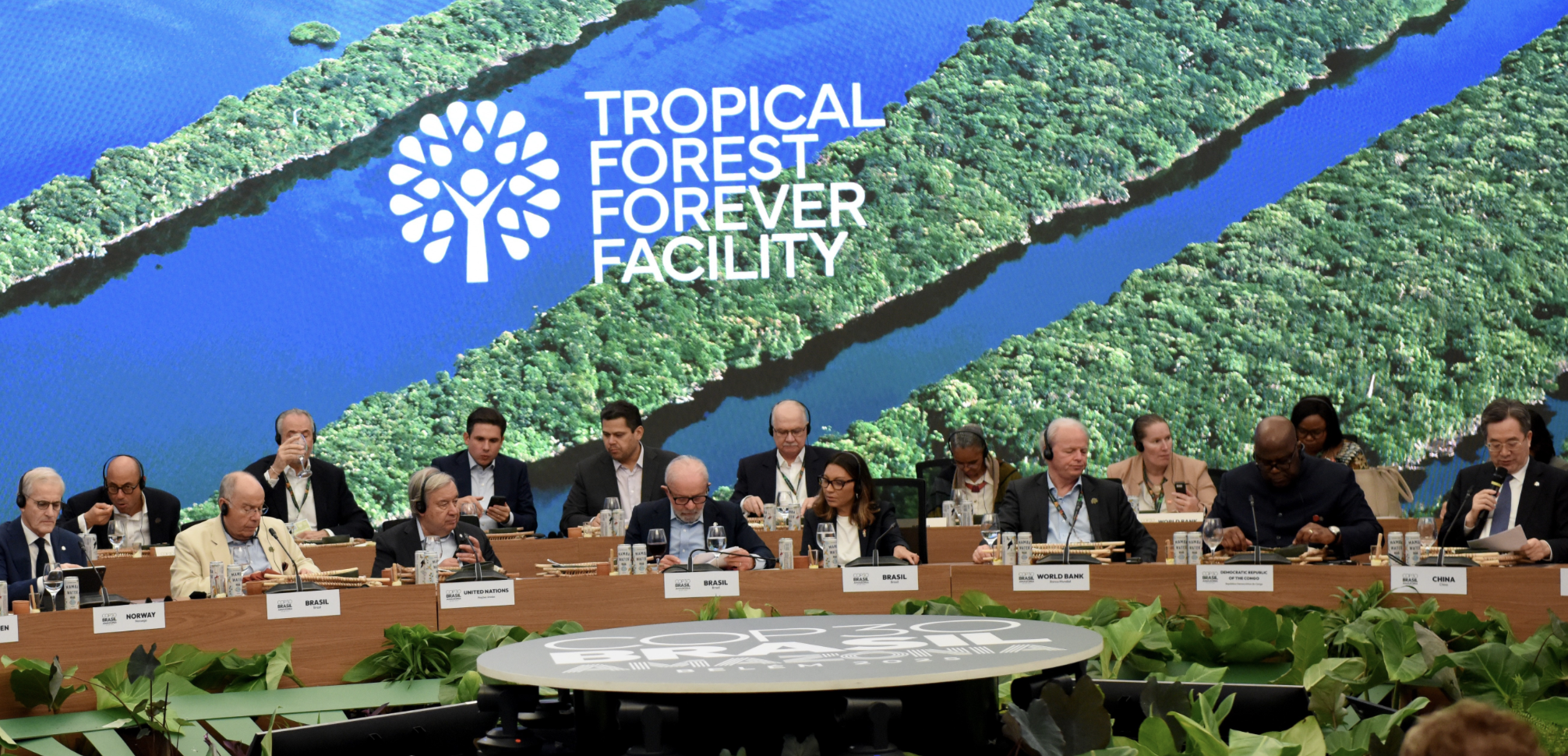
You couldn’t choose a more fitting place to set out the roadmap to ending deforestation, which was central behind Brazil's bid to host. In reality, the final text fell short on delivering such a roadmap, much to the disappointment of many nations. However, the most significant news on protecting and restoring forests came from outside the legal structure of the COP30: the Tropical Forest Forever Facility (TFFF). This new investment mechanism is among the largest multilateral funds for nature, channeling private finance into the protection of forests worldwide.
This innovative fund will reward countries that preserve their forests, bolster local economies, and support communities on the front line of forest protection. This includes allocating 20% of the funds as direct payments to indigenous communities.
Despite helping to design the forest fund over the past two years, the UK announced it would not contribute any public money to it. Considering the fact that the intensity of UK consumption on tropical rainforests is greater than China's, this decision is a disappointing setback. However, the door has not been fully closed, and there is still time. Brazil set its initial fund target for 2026, and we are already working with cross-party MPs and Peers to pressure the Government to support this crucial initiative.
The UK backs the Belém Action Mechanism
Another positive development was the UK’s decision to back the Belém Action Mechanism, or BAM, aimed at delivering a just transition. This move followed pressure from youth groups and over one hundred UK organisations. By supporting BAM, the UK is finally recognising what activists have long argued: forest communities deserve stable, long-term support, and governments in the Global North must take responsibility for financing the protection of ecosystems they have historically exploited. The endorsement is a step forward, and critically, one achieved through collective organising. Activists will continue to push for deeper and more just UK leadership on global forest justice.
This demonstrates that governments do respond to community pressure, both in the UK and globally. In the UK, the priority now must be to deliver the changes needed for climate and nature, support a just transition, advance climate justice, and restore ecosystems through the science-led CAN Bill.
Adaptation Finance Tripled
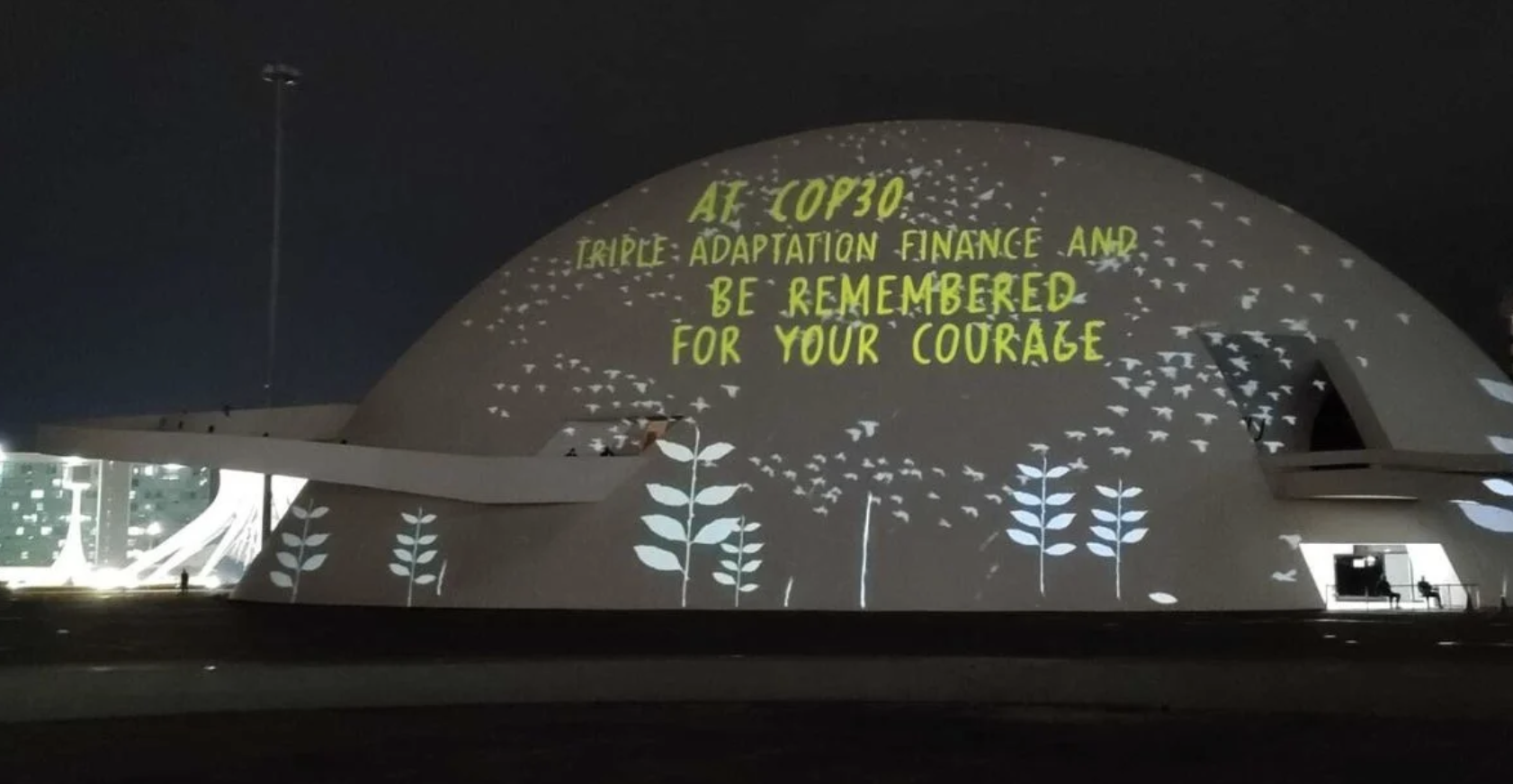
A welcome sign of progress was the agreement to triple adaptation finance. Adaptation finance has long been a central demand of climate justice movements, as frontline communities face severe impacts while receiving minimal support from those driving the crisis. At COP30, campaigners highlighted that funding remains under-resourced, poorly distributed, and delayed by broken promises. Tripling adaptation finance is not just a policy proposal, it is a demand for survival, dignity, and reparations. It’s a test of whether Global North governments are ready to act with the urgency and justice the climate crisis requires.
Despite this being progress, many argue that the adaptation funding and climate finance still fall short of the necessary ambition.
Obligations on adaptation were watered down and although there was agreement to triple funding, the timeline for doing so was pushed by 5 years from 2030 to 2035. Furthermore there was no reference to the Global Goal on Adaptation.
These signs of progress do little to inspire confidence that COP30 delivered the “truth” or the “implementation” that it promised. Instead, the summit repeated familiar patterns: fossil fuel lobbyists dominated, petrostates weakened commitments, and almost nothing was done to close the gap between countries’ NDCs, the global stocktake, and national-level action. So why is the COP process falling short?
Big Actors are missing in action
One of the most worrying dimensions of COP30 has been the absence of the planet’s biggest polluters. The United States didn’t send any high-level officials, cementing their chilling retreat from global climate responsibility. Whilst China and India did send large delegations, neither sent their heads of state: China was represented by its Vice Premier, and India by its Ambassador to Brazil, rather than Prime Minister Modi.
The vacuum of senior leadership from these countries, responsible for a huge fraction of global emissions, deeply undermines the summit. For frontline justice movements, it is a stark reminder that the richest and most polluting nations are still dodging their responsibilities, even as the climate crisis worsens and millions of the world’s most vulnerable face its impacts.

Furthermore, petro-states again took the lead with Saudi Arabia and other major oil economies helping to weaken the plan to move away from fossil fuels, shifting the focus from clear targets to vague promises. Even with the heroic efforts of Columbia, the oil and gas interests won, which once again raises serious questions about the COPs, their mechanisms and how to navigate a way forward to deeply volatile political times.
So how can the UK respond?
Perhaps the best sign for the COP was that an agreement was made at all - and that despite the highest polluters shunning the conference, there is still a global commitment from 193 countries (plus the European Union) to try to address these issues. As Miliband said “the making of the sausage is not pretty”. Yet, in the face of the emergency, how do we deal with the fact that the COP process makes the right statements but falls far short on delivery? That it takes 28 years of COP conferences to include the phrase ‘transitioning away from fossil fuels’ explicitly in the final text, only for it to be removed the following year?
For the public to trust that COP can address global challenges, we needed to see a clear roadmap for ending deforestation and phasing out fossil fuels - yet the conference fell short. Despite this setback, we must find ways to rebuild global consensus and secure commitment to climate and nature action in the face of mounting threats. The only way forward is for countries to lead by example, yet here in the UK we currently have a government that is attacking nature, threatening Rosebank, and expanding runways. For the UK to credibly show the world a path forward, our international commitments must be firmly anchored in domestic law through the science-led CAN Bill. That’s why we’ll continue to call on the Government to step up, turn promises into tangible action and prove that bold leadership can safeguard both people and the planet. The public demands it.
