


This week, in the publication of the much-anticipated North Sea Future Plan, the Government delivered on a promise we have long demanded for climate-nature—to end new oil and gas licences.
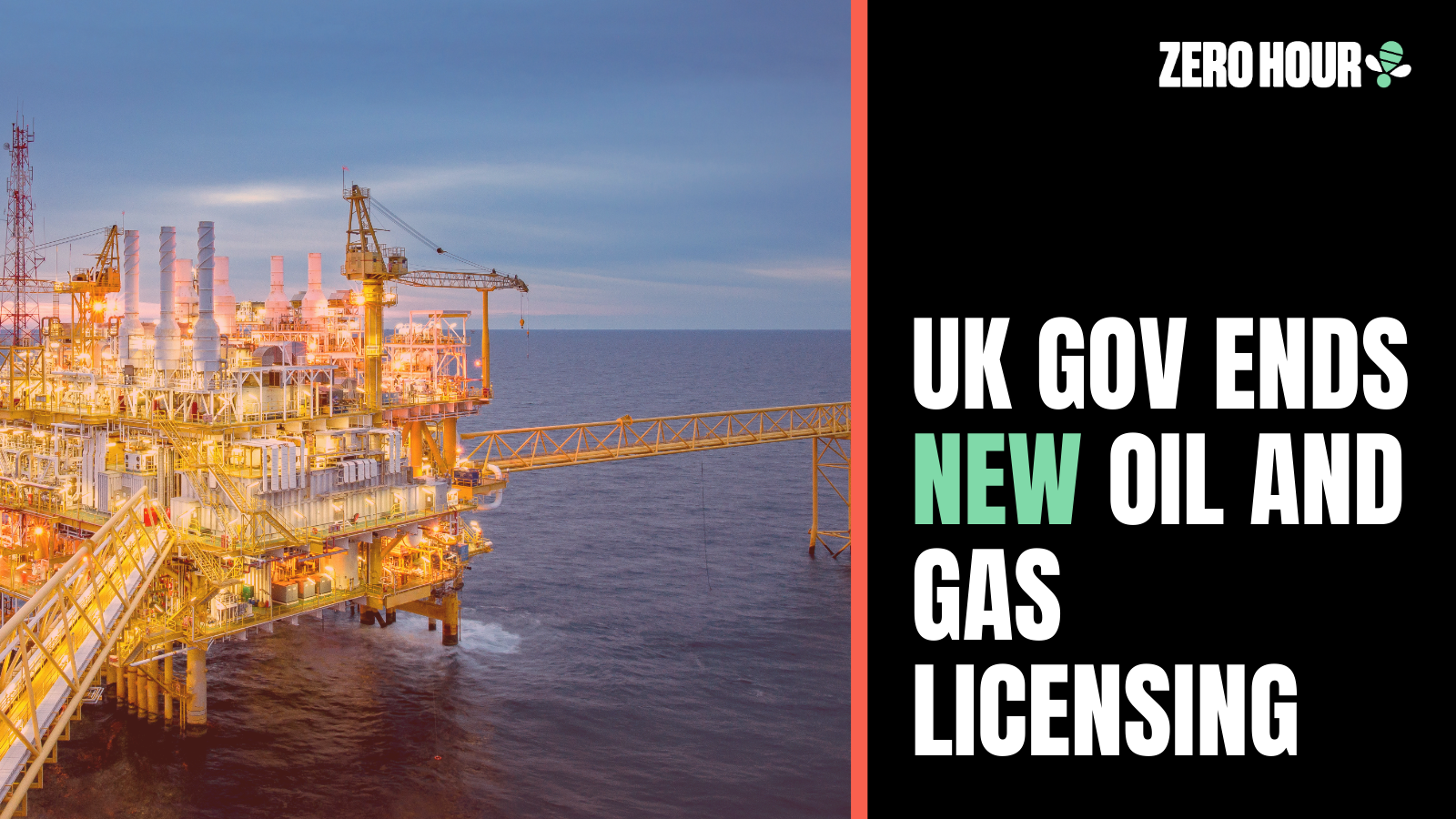
A decision which was unthinkable a decade ago has been hard won by campaigners like you. You’ve been pushing MPs on the need for urgent decarbonisation and the need to transition away from fossil fuels. The decision to end new oil and gas licenses may have been later than we demanded but we cannot understate the enormity of what it represents. We are having an impact and the UK is leading in the end of domestic oil and gas production.
Buried behind headlines on the Budget, this makes the UK the first country in the G7, - and the first major oil and gas producer - to shift away from oil and gas licensing. The decision marks a step towards a key demand in the Climate and Nature Bill, which states that the govt will be responsible for—
“Ensuring the end of the exploration, extraction, export and import of fossil fuels by the United Kingdom as rapidly as possible”
The North Sea Future Plan, instead sets out a transition away from fossil fuels and replaces the objective of the Petroleum Act to “maximise economic recovery” with a new framework of Transitional Energy Certificates that support the management of existing oil and gas fields.
As the BBC, Independent and Guardian have reported, there are some loopholes or concessions given to oil and gas in the form of “tie backs” which permit some additional oil and gas in and around existing licence areas. Uplift, however, have looked into the data, and the concession on allowing limited “tie backs” will allow minimal climate impact. Uplift’s analysis estimates that this could yield a maximum of 45 million barrels of oil equivalent. This is less than a tenth of what’s being proposed on the Rosebank field application.
This is a monumental achievement for climate-nature campaigners.
The first meaningful sign that we will end oil and gas dependency in the UK. However, to deliver for climate and nature, we need to see that the North Sea Future Plan ensures sites with existing licences, like the Rosebank oil field, do not bypass the new tie back conditions. To approve Rosebank would send a dangerous message that existing licences can expand beyond tie backs.
Why this is just the beginning
This is a huge win for the climate movement, but we cannot be complacent. It’s long overdue, and the scale of the transition ahead - combined with current emissions, fossil-fuel dependence and accelerating nature loss - means we remain off track and dangerously underprepared to restore and protect nature. The end of new oil and gas licences is merely putting our foot on the brake. We need to halt and reverse nature loss, accelerate broader decarbonisation in a fair and just transition. All eyes on the integrity of the Government’s commitment to ‘no new oil and gas’ will lie in the outcome of the pending decision on the proposed expansion of the (already licenced) Rosebank oil field.
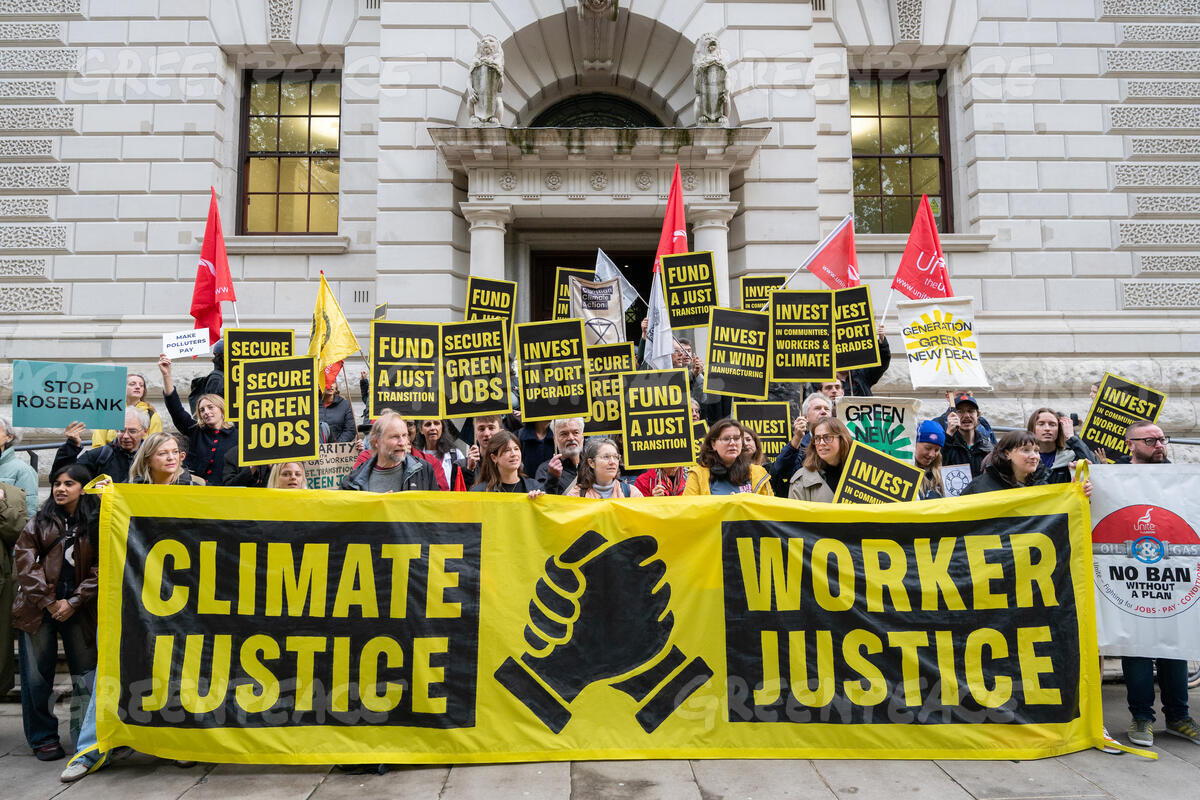
We need a worker-led Just Transition
This new plan features a ‘North Sea Jobs Service’ to give the support workers need to transition into new roles. It will also form a North Sea Future Board, with trade union representation, to oversee the delivery of the plan and to plug shortfalls in existing just transition pathways.
Despite this progress in the North Sea basin, the region is already in decline. The more than 70,000 jobs lost in the past decade have hit communities hard. We cannot wait: funding, training, and urgent action for a Just Transition must be delivered now. Friends of the Earth’s Our Power report lays out clear demands and is the perfect place to start.
We don’t factor in consumption emissions
There is still a long way to go. Fuel demand in the UK remains high, and the impact of pollution on our ecological footprint is still on the rise. With airport expansions, industry, shipping and domestic transport still heavily dependent on fossil fuels; there is a long way to go. Unless we reduce demand for fossil fuels in transport and industry, the UK will continue to import oil and gas and “offshore” its carbon footprint. In 2024 alone, 43.8% of the primary energy supply came from imported fossil fuels.
The UK’s consumption-based emissions reveal a far larger environmental footprint than domestic figures alone. We should not just be responsible for emissions on UK soil, as almost half of our carbon impact occurs abroad through the production, transportation, and disposal of the goods we consume.Our carbon footprint is deeply embedded in global supply chains. While domestic emissions have fallen in recent decades, the UK continues to rely heavily on imported goods and imported oil and gas, whose production drives significant carbon and ecological pressures elsewhere. Blind spots in UK policy in this area remain stark.
Addressing consumption emissions requires not only cleaner production at home but also systemic changes in how goods are sourced, used, and discarded, including stronger due diligence laws, circular economy measures, and shifts toward lower-impact lifestyles.
Why our laws are still failing on climate and nature
The warnings are clear. We remain dangerously off track to limit global warming to well below 2ºC, as we committed to in 2016. Instead we are on a path to greater insecurity and more extreme weather. Whilst we recognise the significant decision to end new licensing on oil and gas, we know plans are falling short of our international agreements. The Carbon Budget Delivery and Growth Plan falls short and would achieve 96% of the cuts to reach our 2030 Nationally Determined Contribution (our climate action plan under the Paris Agreement) and 99% of the 2035 NDC. Furthermore, the UK’s current plans still rely heavily on expensive, unproven technologies to get us there. Furthermore, if nature is not restored, then all of our efforts to decarbonise will be for nothing.
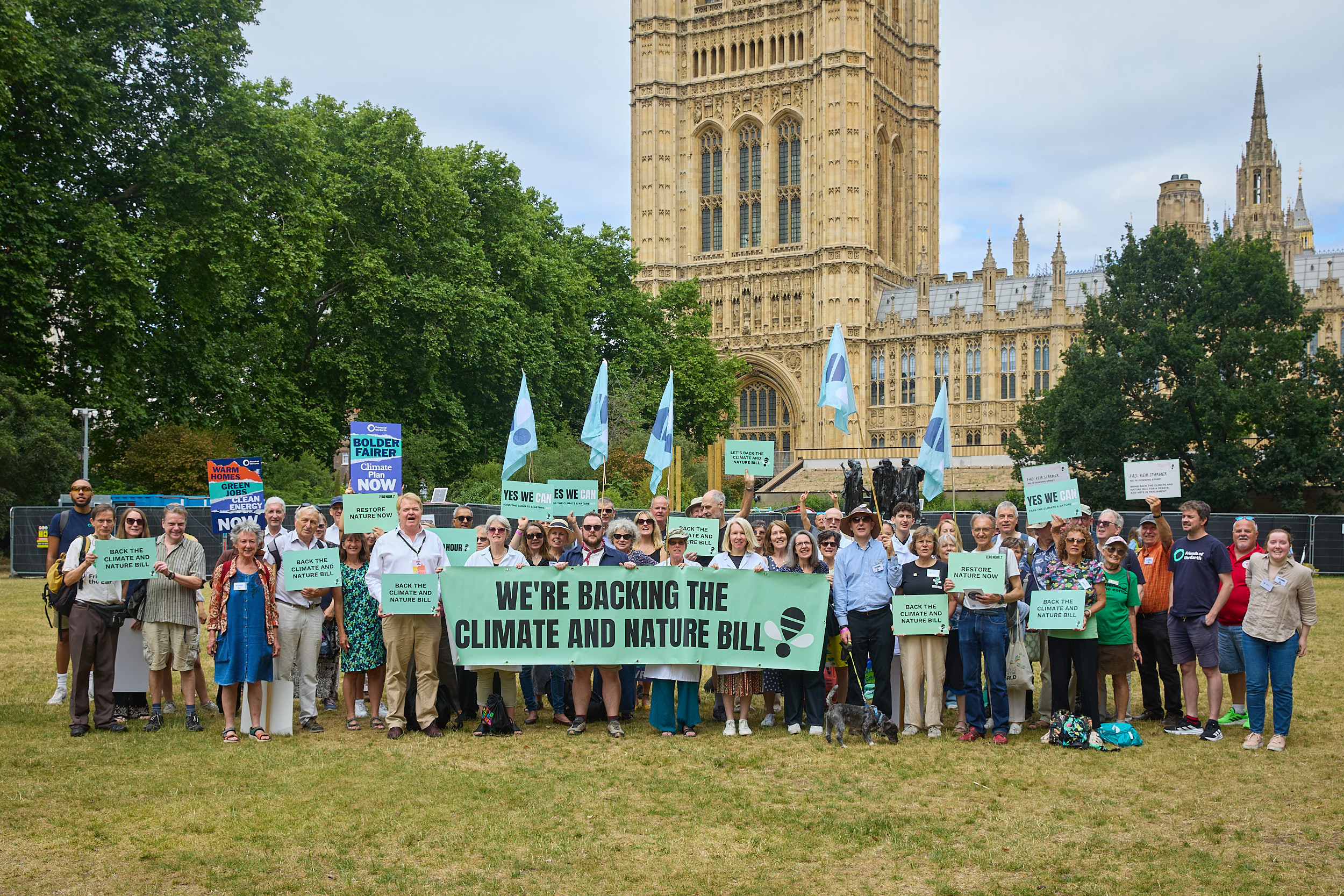
The answer is complex, but it begins with a legal framework that unites our response to climate change and the destruction of nature, that holds us accountable for our full ecological and climate footprint and locks our international commitments into law, turning promises into action. The solution is the CAN Bill.
